

The Role of Quality Assurance in Structural Steel Fabrication
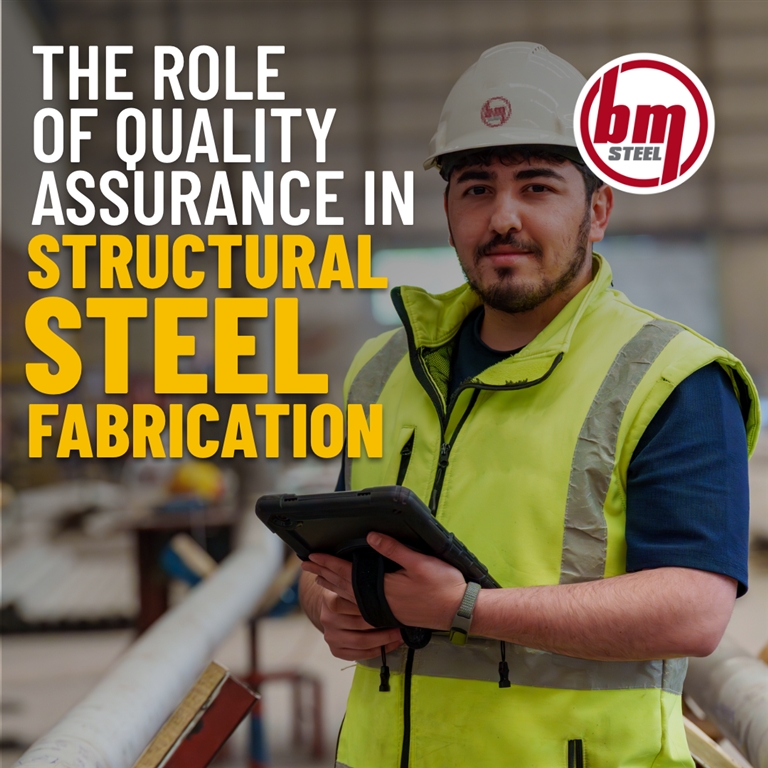
Quality assurance is one of the most important parts of structural steel fabrication. Steelwork forms a critical part of many buildings, supporting strength, stability, safety, and long term performance. Because of this, every stage of the fabrication process must be carefully controlled.
From material selection and drawing review through to fabrication, inspection, finishing, delivery, and installation, quality assurance helps ensure steel components are manufactured to meet project specifications and recognised standards.
For contractors, engineers, architects, and clients, a strong quality assurance process provides confidence that the steelwork will perform as required.
Why Quality Assurance Matters
Structural steelwork must be reliable. Once installed, it becomes part of the building’s core structure and must support the loads and conditions it was designed for. Poor quality fabrication can lead to delays, rework, installation issues, or long term performance concerns.
Quality assurance helps prevent these problems by creating a controlled process. It ensures that materials, workmanship, dimensions, finishes, and documentation are reviewed throughout the project.
Rather than being a final check at the end, quality assurance should be built into every stage of fabrication. This approach supports consistency, safety, and dependable project delivery.
Material Control and Traceability
The quality of structural steelwork begins with the materials used. Steel must be suitable for the project requirements and must be handled, stored, and processed correctly.
Material traceability is an important part of quality assurance. It allows fabrication teams to confirm that the correct materials have been used and that they meet the required specification. This is particularly important for structural steelwork, where performance depends on compliance with approved standards and design requirements.
Clear records and controlled procedures help ensure that every stage of the material journey is properly managed.
Reviewing Drawings and Specifications
Before fabrication begins, drawings and specifications must be carefully reviewed. This ensures that the fabrication team understands the project requirements, dimensions, connection details, finishes, and installation considerations.
Any uncertainty should be addressed before production starts. Early review helps reduce the risk of errors, delays, or rework later in the process.
This stage is especially important on complex projects where steelwork must coordinate with other trades, architectural details, services, or existing site conditions. A clear understanding of the drawings supports accurate fabrication and smoother installation.
Controlled Workshop Processes
A structured workshop environment plays a major role in quality assurance. Fabrication should be carried out using appropriate equipment, skilled personnel, and established processes.
Controlled workshop conditions allow for accurate manufacturing and consistent results. Components can be measured, checked, assembled, and inspected before leaving the fabrication facility.
This reduces the risk of issues being discovered on site, where adjustments can be more difficult and disruptive. By maintaining strong controls in the workshop, fabrication teams help protect the quality and reliability of the finished steelwork.
Inspection at Key Stages
Inspection is an essential part of quality assurance. Steel components should be checked at key stages of the process to confirm they meet the required specifications.
This can include checks on dimensions, alignment, connection details, surface preparation, finish, and overall workmanship. The purpose of inspection is to identify and resolve issues before they affect the next stage of the project.
Regular inspection supports consistency and helps ensure that completed steelwork is ready for delivery and installation.
Compliance with Recognised Standards
Structural steel fabrication must align with relevant standards and regulatory requirements. Compliance is essential for safety, performance, and project confidence.
BM Steel Fabrications is CE Certified to EN 1090, Safe T Cert Accredited, and ISO 9001 Approved. These standards reflect the importance of controlled processes, quality management, and safety within steel fabrication.
For project teams, working with a fabrication partner that understands compliance helps reduce risk and supports responsible construction practices.
Supporting Safer Installation
Quality assurance does not end when fabrication is complete. Well fabricated steelwork also supports safer and more efficient installation.
When components are manufactured accurately and checked before delivery, site teams can install them with greater confidence. Correct dimensions, coordinated connection details, and suitable preparation all contribute to a smoother installation process.
This helps reduce unnecessary handling, delays, and adjustments on site. It also supports better coordination with other trades and the wider construction programme.
Long Term Performance and Reliability
The quality of steel fabrication has a direct impact on long term building performance. Steelwork must continue to perform after installation, supporting the structure throughout its intended life.
Quality assurance helps ensure that steel components are suitable for their purpose, manufactured correctly, and installed as part of a reliable system. This contributes to durability, structural integrity, and confidence in the finished building.
For clients and contractors, quality assurance is not just a technical requirement. It is an investment in the long term success of the project.
BM Steel’s Commitment to Quality
At BM Steel Fabrications, quality is central to how we work. Our team delivers structural steel fabrication and bespoke architectural steelwork for projects across residential, commercial, hospitality, education, and public sectors.
We focus on controlled processes, clear communication, compliance, and careful project coordination. From initial review through to fabrication and installation, our approach is designed to support safe, accurate, and reliable steelwork.
Quality assurance plays a vital role in structural steel fabrication. It supports safety, compliance, accuracy, durability, and long term performance.
By choosing a fabrication partner with strong quality systems and proven technical capability, project teams can reduce risk and improve confidence at every stage of the build.
To discuss your next structural steel fabrication project, contact BM Steel Fabrications today.


.png)