



Primary and Secondary Steelwork: Understanding Their Roles in Modern Construction
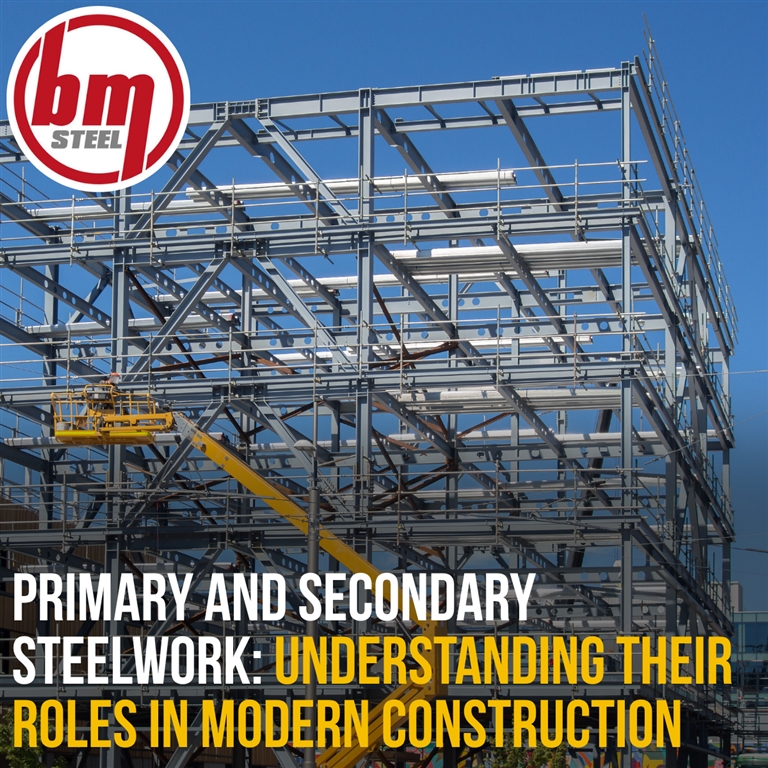
Steelwork performs a wide range of functions within modern buildings, from forming the principal structural frame to supporting architectural features, building services and other specialist elements.
While structural steel is often considered as a single package, steelwork can broadly be divided into primary and secondary elements. Understanding the different roles these components perform can help demonstrate why coordination, accurate fabrication and careful installation are essential throughout a construction project.
What Is Primary Structural Steelwork?
Primary structural steelwork forms part of the main load bearing structure of a building.
Depending on the design of the structure, this can include steel columns, beams, frames and other major structural components designed to transfer loads through the building and into its foundations.
These elements must be manufactured and installed in accordance with the project's structural design and relevant technical requirements.
Accuracy is particularly important because the position of primary steelwork can affect numerous other elements of the building.
What Is Secondary Steelwork?
Secondary steelwork typically refers to steel components that support other elements of a building without forming the principal structural frame.
The exact requirements vary considerably between projects.
Secondary steel can be used to provide supports, connections, access arrangements or frameworks for architectural and building services elements. Depending on the project, this can involve specialist configurations designed around a particular part of the building.
Although these components may be described as secondary steelwork, their successful design, fabrication and installation can be essential to the performance and completion of the wider project.
Supporting Architectural Elements
Modern buildings frequently combine structural requirements with demanding architectural designs.
Secondary steelwork can provide the supporting framework required to integrate architectural components into the main structure.
This requires careful consideration of dimensions, connections, finishes and interfaces with surrounding materials.
The steel fabricator may therefore need to work closely with architects, engineers, contractors and specialist subcontractors to ensure that fabricated components meet both technical and architectural requirements.
Accommodating Building Services
Modern commercial, residential, hospitality and public buildings can contain extensive mechanical and electrical services.
Plant, ventilation systems and other building services can require dedicated steel supports or enclosures.
These elements need to be coordinated with the primary structure and the services they support. Accurate information is important because changes to equipment positions, service routes or structural interfaces can affect the steelwork required.
Effective coordination before fabrication helps ensure that secondary steelwork can be installed correctly when it reaches site.
The Importance of Interfaces
One of the most important considerations when delivering primary and secondary steelwork is the interface between different building elements.
A steel component rarely exists in isolation.
It may connect to the main structure, support another material or system, interact with architectural finishes or occupy space alongside building services.
Even relatively small dimensional discrepancies can create problems when multiple components need to meet at a defined location.
Detailed coordination and accurate fabrication help ensure that these interfaces are considered before installation begins.
Installation and Project Sequencing
Primary and secondary steelwork may also be required at different stages of the construction programme.
The primary frame typically needs to progress before many subsequent building elements can be installed. Secondary steelwork may then be introduced as the building develops and additional structural, architectural or services requirements are completed.
Understanding this sequence allows fabrication and delivery to be planned around the needs of the project.
BM Steel's involvement in the redevelopment of the Allen Stand at Lord's Cricket Ground demonstrates the varied steelwork requirements that can form part of a major construction project, with the company's package including secondary steelwork alongside architectural metalwork and temporary evacuation stairs.
Delivering Complete Steelwork Solutions
Primary and secondary steelwork perform different functions, but both require careful coordination, accurate fabrication and controlled installation.
As buildings become increasingly complex, successful steelwork delivery depends on understanding how individual components interact with the wider structure, architectural design and building services.
BM Steel Fabrications provides structural and bespoke steelwork solutions across a diverse range of construction projects, supporting clients from fabrication through to installation.
For more information about how BM Steel Fabrications can support the steelwork requirements of your next project, contact our team today.


.png)