


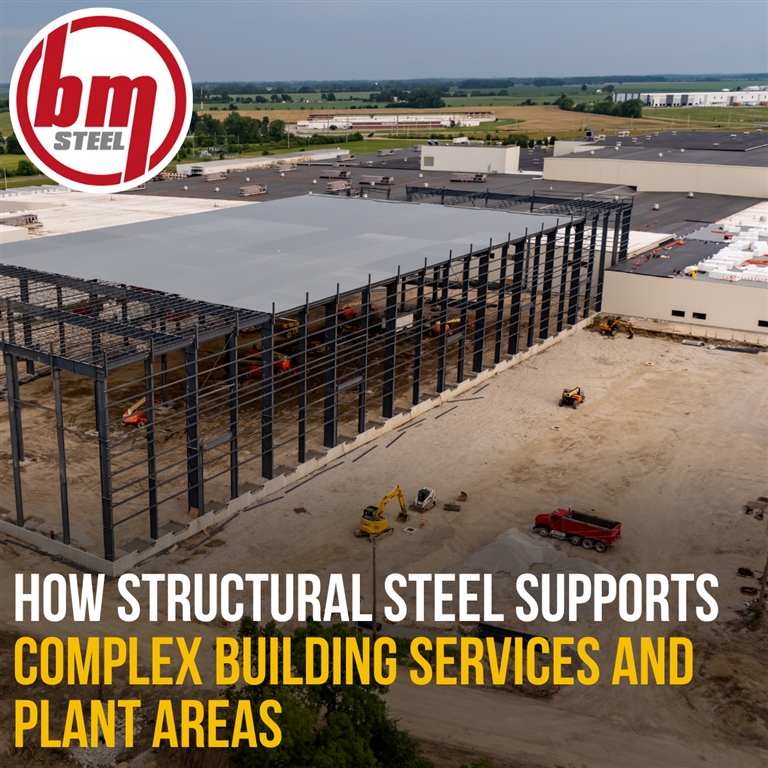
How Structural Steel Supports Complex Building Services and Plant Areas
Modern buildings depend on increasingly complex mechanical, electrical and ventilation systems. While much of this infrastructure remains out of sight once a building is complete, its successful integration can require carefully designed and fabricated structural and secondary steelwork.
From rooftop plant areas and equipment supports to plant room enclosures, louvre support structures and access steelwork, steel fabrication plays an important role in creating safe, durable and practical solutions for building services.
At BM Steel Fabrications, our experience in structural and bespoke steelwork enables us to manufacture steel components that respond to the specific requirements of commercial, residential, hospitality, education and other complex construction projects.
Supporting Modern Building Services
Mechanical and electrical systems can place significant demands on a building's structure. HVAC equipment, ventilation systems, generators, tanks and other plant may require dedicated steel supports capable of safely transferring loads into the main structure.
These requirements can become particularly challenging in rooftop plant areas, where space is limited and multiple systems must often be accommodated within a relatively small footprint.
Secondary steelwork can provide the framework required to support equipment while helping the wider project team make efficient use of the available space.
The fabrication process must take account of factors including equipment dimensions, loading requirements, access, maintenance requirements and connections to the primary structure.
Plant Room Enclosures and Screening
Plant equipment often needs to be enclosed or screened for practical and architectural reasons.
Steel frameworks can provide the supporting structure for plant room enclosures, architectural screens and louvre systems, helping to conceal mechanical equipment while maintaining the ventilation and access required for its operation.
These structures may appear relatively straightforward, but their successful delivery can involve considerable coordination.
Fabricated steel must interface accurately with the primary structure, cladding, louvres, mechanical equipment and other elements of the building. Accurate dimensions and carefully planned connection details therefore become essential.
The Importance of Secondary Steelwork
Primary structural steel forms the main load-bearing framework of a building, but secondary steelwork performs many equally important supporting functions.
Secondary steel may be required for plant equipment, screens, access systems, architectural features and connections between different building elements.
Because these requirements can vary considerably between projects, many secondary steel components require bespoke fabrication rather than standardised solutions.
A detailed understanding of the project requirements allows individual components to be fabricated to suit the available space and their specific structural or architectural purpose.
Coordination With Other Trades
Building services projects typically involve several specialist contractors working within the same areas.
Structural steelwork may need to interface with mechanical and electrical services, roofing systems, cladding, ventilation equipment and architectural finishes. Effective coordination between these disciplines can help identify potential clashes before they become site problems.
This is particularly important where space is restricted.
Fabrication and installation planning must consider not only where the steelwork will ultimately be positioned, but also how it will be transported, lifted, assembled and accessed during construction.
Accuracy From Fabrication to Installation
Accuracy is fundamental when producing steelwork for plant and building services.
Even relatively small dimensional discrepancies can create difficulties when steel components must connect with existing structures, equipment or systems manufactured by another contractor.
Controlled fabrication processes help ensure components are produced in accordance with approved drawings and project specifications before being prepared for delivery and installation.
Quality control throughout this process also supports consistent structural performance and helps reduce the risk of avoidable adjustments on site.
Long Term Performance and Access
Plant areas are designed to remain operational throughout the life of a building. The supporting steelwork must therefore provide the durability and structural integrity required for long term use.
Future maintenance also needs to be considered.
Equipment may require inspection, servicing or eventual replacement, making appropriate access an important consideration when steel structures and enclosures are designed and coordinated.
By considering installation, operation and maintenance requirements together, project teams can create plant areas that perform effectively beyond the construction phase.
Specialist Steelwork for Complex Requirements
Building services demonstrate how structural and secondary steelwork often performs important functions that are not immediately visible within a completed building.
Successfully integrating plant, ventilation systems, equipment and architectural screening requires careful coordination between design, fabrication and installation.
BM Steel Fabrications provides structural steel fabrication and bespoke steelwork solutions for projects across a wide range of sectors.
To discuss structural, secondary or bespoke steelwork requirements for an upcoming project, contact the BM Steel Fabrications team.


.png)