



From Workshop to Site: The Logistics Behind Successful Structural Steel Installation
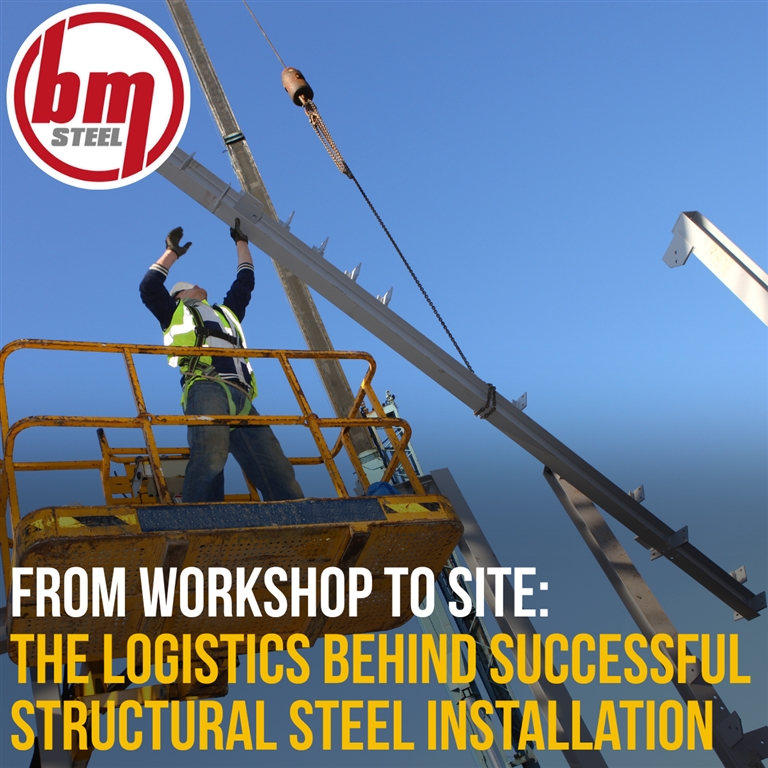
Successful structural steelwork involves much more than manufacturing components to the correct drawings.
Once fabrication is complete, every beam, column, connection and bespoke steel component must reach the construction site in the correct condition, at the appropriate stage of the programme and in a sequence that supports safe and efficient installation.
For complex projects, the logistics connecting workshop and site can therefore be just as important as the fabrication process itself.
Effective planning helps ensure that completed steelwork moves efficiently from manufacture through transportation and ultimately into its final position within the structure.
Installation Planning Starts Before Delivery
Steelwork logistics should not begin when a delivery vehicle leaves the fabrication facility.
Installation requirements can influence decisions much earlier in the project.
The project team may need to consider component sizes, weights, lifting requirements, connection methods, access restrictions and the order in which the structure will be erected.
Understanding these requirements before fabrication is completed allows steel components to be prepared with their eventual transportation and installation in mind.
This is particularly valuable on projects where site conditions restrict the size of components that can be delivered or lifted into position.
Sequencing Steel Deliveries
Construction sites have limited space, particularly in urban locations.
Delivering large quantities of steel before they are required can create unnecessary handling and storage requirements. It may also interfere with other contractors working on the project.
Sequenced delivery provides a more controlled alternative.
Steel components can be organised according to the erection programme and delivered when the site team is ready to install them.
This approach requires communication between the fabrication facility, transport providers, installation teams and the wider project management team.
When managed effectively, it can help maintain progress while reducing congestion on site.
Preparing Components for Transportation
Structural steel components can vary considerably in size and geometry.
Before leaving the workshop, fabricated elements need to be prepared so that they can be transported safely while protecting the quality of the finished steelwork.
Loading plans may need to account for component dimensions, weight distribution and unloading requirements at the destination.
The order in which components are loaded can also be important. Steel required first during installation should be accessible at the appropriate point in the delivery and erection sequence.
Careful preparation reduces unnecessary movement and handling once the material reaches site.
Managing Restricted Site Access
Not every construction site can accommodate unrestricted deliveries.
City centre developments, refurbishment projects and sites surrounded by existing buildings may have narrow access routes, limited unloading areas or strict delivery windows.
These conditions place additional importance on logistics planning.
Delivery vehicles may need to arrive at precisely coordinated times. Components may need to be fabricated or transported in smaller sections. Lifting operations may also have to take place within defined periods to minimise disruption to surrounding activity.
Understanding these restrictions early allows fabrication and installation strategies to be developed around the realities of the site.
Lifting and Erection Considerations
Getting steelwork to site is only one part of the process. It must then be moved safely into its final position.
Component weight, geometry, lifting points and erection sequence all influence how this is achieved.
The installation team needs appropriate information about the steelwork being handled and the sequence in which components are required.
Planning these operations helps create a controlled progression from delivery through lifting, positioning and connection.
For complex structures, individual components may also depend on other steelwork being installed first. The delivery programme must therefore correspond with the planned erection sequence.
Reducing Unnecessary Site Handling
Every additional movement of a structural steel component creates another logistical requirement.
Efficient delivery planning aims to minimise unnecessary handling by coordinating workshop preparation, transportation and erection.
Where practical, components can move from the delivery vehicle into the installation sequence without requiring extended periods of site storage.
This can be particularly beneficial on projects where space is at a premium.
Reducing unnecessary handling also helps protect fabricated components from damage and allows the site team to concentrate on installation rather than repeatedly relocating material.
Communication Between Workshop and Site
Effective steelwork logistics depend on accurate, current information.
Changes to the construction programme can affect delivery dates. Site conditions may influence access. Installation progress can change the sequence in which components are required.
Communication between workshop and site teams allows these factors to be managed as the project progresses.
Rather than viewing fabrication, transport and installation as separate activities, treating them as connected stages of the same process can support more efficient project delivery.
Quality Throughout the Delivery Process
Quality control does not end when fabrication is completed.
Steel components must remain identifiable, protected and correctly organised as they progress from the workshop to their final position.
A structured approach to preparation, handling and delivery helps maintain the quality established during fabrication while supporting efficient installation on site.
For clients and main contractors, this provides greater confidence that fabricated components will arrive ready for the next stage of construction.
Connecting Fabrication with Successful Installation
The journey from the workshop to the completed structure requires coordination across multiple disciplines.
Fabrication accuracy remains fundamental, but transportation, sequencing, site access, lifting and installation planning all contribute to the successful delivery of structural steelwork.
By considering these requirements as part of the wider fabrication and installation process, project teams can reduce unnecessary handling, respond to site constraints and support the construction programme.
BM Steel Fabrications provides structural steel fabrication and bespoke steelwork services, supporting projects from fabrication through to installation.
To discuss structural steel fabrication and installation requirements for an upcoming project, contact the BM Steel Fabrications team.


.png)